

Visit Japan the Right Way: A 10-Day Japan Travel Itinerary That Balances Culture, Adventure, and Ikigai
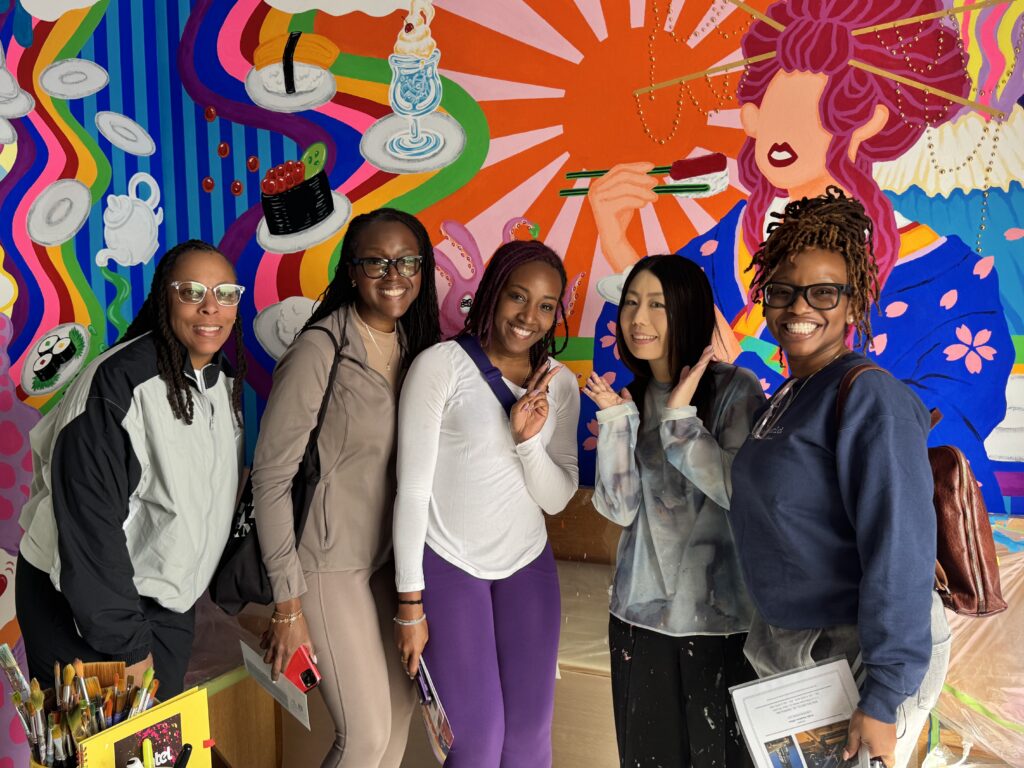
If you’re planning your first trip to Japan and wondering how to fit Tokyo, the Japanese Alps, Osaka, cultural experiences, food tours, and even an onsen into one trip, this 10-day itinerary shows exactly how we did it.
When the Traveling Black Women Network decided to do Japan in the winter, we knew we weren’t just booking a trip, we were curating a 10-day experience… a soft winter adventure that would create memories for years to come.
We wanted the culture, the food, the anime, the hustle & bustle… all the things! And what did we get? All of that and more. Snow monkeys, bullet trains, sushi rolling, and the kind of belly laughs that only happen when you’re navigating a new country with a group of dope people!
If you’re planning your own Japan itinerary, this is where you need to start.
I’m walking you through exactly what we did, what’s worth it, and how to recreate (or remix) our 10-day winter in Japan itinerary.
Let’s get into it.
🇯🇵 Our 10-Day Japan Itinerary At A Glance
Before I tell you about our trip, let me tell you what you will need to get around Japan:

Japan Rail (JR) Pass
You can purchase your pass online using authorized retailers like Klook. Then, activate your pass before your first Bullet Train ride in Japan.
If you are wondering whether or not a JR pass is worth it, my answer is yes! When I added up the amount it would cost for us to travel from city to city on the Shinkansen, the total was substantially higher than the total amount for the 7-Day JR Pass.
Suica Card
The JR Pass does not extend to local train lines like the Tokyo Metro. The Suica Card is the easiest way to pay for your local train rides. Apple uses can load the Suica card directly to the wallet.


GoTaxi
Uber is available, but GoTaxi is the way to go (no pun intended) for ordering a cab.
eSIM
Although my T-Mobile International Plan worked, I got better service with my eSIM from Airalo. I needed this especially for Suica transactions, Google Translate, Google Maps, WhatsApp, and GoTaxi.
Kicking Things Off in Tokyo
First, let’s talk about our first stay on this journey: Shiba Park Hotel also known as “The Library Hotel”
As 4 book nerds over 35, it felt good to be surrounded by books we loved: travel, anime, novels, etc. Each floor features curated book collections and quiet reading spaces that you can easily get lost in for hours. This design felt aligned with our intentions to create a balance travel experience.
Hotel Snapshot: Shiba Park Hotel, Tokyo

Best for: Travelers who want a calm, culturally immersive stay in Tokyo with easy access to major attractions without being in the midst of the hustle and bustle.
Neighborhood: Minato, Tokyo
A quieter, centrally located district within walking distance of Tokyo Tower and multiple train lines.
Price Range: Approx. $180–$350 USD per night depending on season and room type. Winter often offers better value compared to peak cherry blossom season.
What We Loved Most
- Library-inspired Design
- Exceptional location
- Impeccable Hospitality
- Peaceful Environment
- And, an amazing breakfast!
- Free Activities for Guests (Tea Ceremony, Kintsugi Workshop, Walking Tours, etc)
What to Know Before Booking:
- This is not a flashy luxury hotel, it’s a 4-star refined, culturally grounded boutique experience
- Rooms in Tokyo are generally smaller than U.S. hotel rooms, but thoughtfully designed for comfort (just wait until you experience the famous Japanese toilets)
- The area is much quieter than Shibuya or Shinjuku, which is ideal for rest but less nightlife-focused


This Hotel is Ideal for:
- Soft adventure travelers balancing cultural exploration with restoration
- First-time visitors to Tokyo
- Solo travelers and small groups
- Readers, writers, and culturally curious travelers
- Travelers prioritizing calm, intentional experiences
Would I Stay Here Again? Absolutely!!
Starting our Japan travel experience here allowed us to ease into the rhythm of the country instead of forcing ourselves into it.
CLICK HERE TO READ OUR FULL REVIEW OF SHIBA PARK HOTEL
Day 2: Our First Introduction to Tokyo’s Hustle & Bustle
First Stop – Shibuya Food Tour
On our first full morning in Tokyo, we intentionally didn’t rush. We booked a late-morning, small-group Shibuya food tour through GetYourGuide. This allowed us time to sit and enjoy Shiba Park Hotel’s amazing breakfast spread together, enjoy their Tea Ceremony Presentation after breakfast, and then embark on our first train ride to Shibuya.
I would argue that a food tour is one of the smartest things to do in Japan on your first day. It is truly like an enjoyable crash course to eating in Japan. With one of the richest and most intentional food cultures in the world, navigating menus, recognizing ordering etiquette, and understanding you’re eating can feel intimidating to a newbie.
This food tour helped remove that barrier immediately. We visited four local restaurants and sampled 13 dishes, each one offering insight into Japan’s culinary identity in Tokyo and beyond.
Our guide walked us through Shibuya, one of Tokyo’s most vibrant districts, introducing us to places that we may have never found on our own. Then, she explained common dishes, ingredients, and preparation styles so we could recognize and even request them later in our trip.
This experience allowed us to orient ourselves with the food culture in Japan and ask direct questions that would help us navigate the food scene for the remainder of the trip.
– Experience Snapshot: Shibuya Food Tour –

Tour Provider: Booked via GetYourGuide
Duration: Approx. 3 hours
Start Time: 11AM
Group Size: Small group
Neighborhood: Shibuya, Tokyo
Best For: First-time visitors to Japan
Next Stop – Kintsugi Cultural Workshop
Once our food tour wrapped up, we spent some time lingering around Shibuya and then hopped back on the Tokyo Metro to return to the Shiba Park Hotel for a cultural Kintsugi workshop offered to guests.
Kintsugi, which translates to “golden joinery,” is the centuries-old Japanese practice of repairing broken pottery using lacquer mixed with gold powder. This philosophy around brokenness spoke volumes to us as Black women moving through an unforgiving world.
Instead of hiding cracks, Kintsugi highlights them by transforming those fractures into part of the object’s story rather than something to conceal. The philosophy is deeply connected to the Japanese worldview of embracing imperfection, resilience, and transformation.
As a tourist, workshops like this shift you from observer to participant. Sitting there, holding a broken coaster in my hands, I realized that it wasn’t just an art workshop. It was a moment to reflect on every step and misstep that brought me to that very moment of being in Japan with a group of women that I cared about deeply. Ultimately, it created space for gratitude.
– Experience Snapshot: Kintsugi Workshop at Shiba Park Hotel –
Location: Shiba Park Hotel, Tokyo
Duration: Approx. 60–90 minutes
Cost: 5,000 JPY per person (~$32 USD)
Skill Level: Beginner-friendly
Click Here to Learn More About the Kintsugi Class

Two Nights in the Japanese Alps
Day 3: The Bullet Train to Nagano
There’s a moment every Japanese tourist remembers about the first time they boarded a bullet train in Japan.
For me, it started with confidence… and quickly turned into a lesson.
On Day 3 we activated our 7-Day Japan Rail (JR) Pass and made our way to the platform to board the Hokuriku Shinkansen from Tokyo to Nagano. With only minutes before departure, we did what most first-time visitors might do, we went straight to the platform and boarded the first open door we saw. You know… like New York.
Except… this wasn’t NY.
On the Hokuriku Shinkansen, only the first 3 train cars are designated for non-reserved seating. The remaining cars require advance seat reservations.
We didn’t know that. I actually assumed it would the other way around.
So when the train began moving and a passenger approached us politely, showing us their seat reservation, we realized we were sitting in assigned seats.
We apologized immediately and gathered our suitcases.
Then it happened again.
And again.
What we thought would be a calm, scenic ride turned into us moving from car to car, suitcases in hand, quietly trying to get to the non-reserved section before the next stop.
HOW TO RESERVE SEATS WITH YOUR JR PASS
DON’T MAKE THE SAME MISTAKE WE MADE… CLICK THE LINK ABOVE FOR STEP BY STEP DIRECTIONS
Hotel Snapshot: Hotel Tsubakino, Nagano
In Nagano, we checked in Hotel Tsubakino-a traditional Japanese ryokan. A style of inn that emphasizes hospitality, seasonal cuisine, and restorative bathing. Staying here isn’t just about accommodation. It’s about participating in a centuries-old cultural tradition centered around rest, nourishment, and care.
When we entered our room, we were amazed: tatami mat floors, low furnishings, and large windows framing snow-covered mountain views.
A table with four cushions invited us to sit Japanese style and enjoy a cup of green tea before dinner. A staff member informed us that the table would be replaced by four futons while we were at dinner.
Sleeping on futons might sound unfamiliar, but it was surprisingly comfortable and deeply aligned with the slower, grounded energy of Nagano.
What I love about this hotel most is that it wasn’t a hotel trying to replicate Western luxury for our “comfort.”
Instead, it was an invitation for us into redefine comfort through Japanese living.
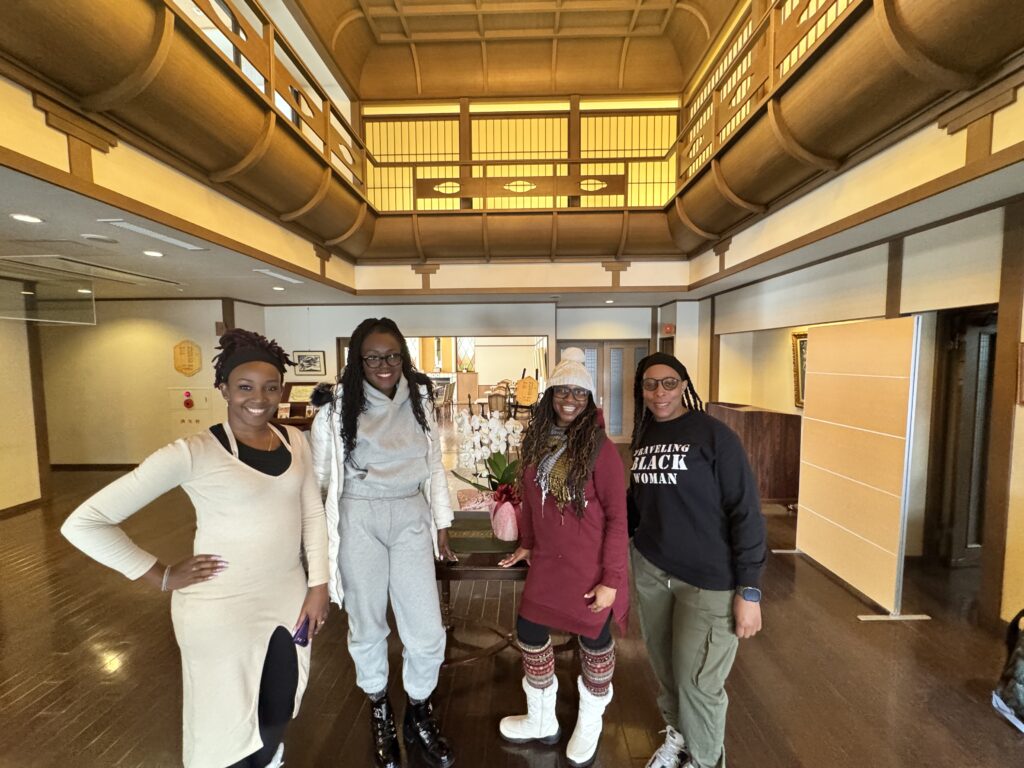
Best for: Travelers seeking a traditional ryokan experience with onsen baths and multi-course dining
Location: Yudanaka Onsen, Nagano (walking distance to train station)
Room Style: Traditional tatami room with futons
Meals: Half-board (multi-course dinner + traditional breakfast included)
Onsen Access: Public/Private onsen available on-site
Price Range: Approx. $200–$400 per night depending on season and meal plan
CLICK HERE FOR MY FULL REVIEW ON HOTEL TSUBAKINO
Day 4: Snow Day!!
Now this is the moment that we answered the question: Is winter a good time to visit Japan? My answer once again is yes!
After an incredible breakfast at Hotel Tsubakino, we set out for an incredible snow day in the Japanese Alps. We started off with Jigokudani Snow Monkey Park and then made our way to Shiga Kogen for ski lessons.
Jigokudani Snow Monkey Park
Jigokudani Snow Monkey Park is home to Japanese macaques, often called snow monkeys, who descend from the forest during winter to soak in the park’s geothermal waters. It was so impressive to see these wild monkeys bathing careless in natural hot springs.
From Hotel Tsubakino, we walked to the nearby bus stop and took a local bus directly toward the park entrance. The process was simple and accessible. Once you arrive, there’s a 30–40 minute walk along a forest trail before reaching the monkeys.
Heads Up! The admission is only around $5 USD so I highly advise you not to book a full tour for this. Save your money and do the leg work for this one! Most tours are a few hundred dollars!
The path has a slight incline but it is peaceful, and surrounded by beautiful, snow-covered trees. The air was crisp and refreshing. Honestly, the walk through the forest was the best part. It was meditative and required you to be completely present.
– Tips for Visiting Snow Monkey Park –

Best time to visit:
December through February, when snow is present and monkeys frequently use the hot springs
Time required:
Allow 2–3 hours total including walking time
Wear:
- Waterproof boots
- Warm layers
- Gloves
Accessibility:
Arrive by public bus from Yudanaka Station
Who it’s best for:
Nature lovers, animal lovers, photographers, and travelers seeking unique, meaningful winter experiences
Shiga Kogen: Beginner Ski Classes at one of Japan’s Largest Alpine Regions
After spending the morning frolicking at Snow Monkey Park, we ventured off to Shiga Kogen by bus to experience skiing in the Japanese Alps… the ultimate soft adventure.
Shiga Kogen was a host site for the 1998 Nagano Winter Olympics, and today it offers dozens of interconnected ski areas, panoramic mountain views, and some of the most beautiful winter landscapes in Japan.
Getting there was simple, but longer than anticipated. From Snow Monkey Park, we boarded a local bus that gradually climbed higher into the mountains, revealing expansive alpine views along the way. It was absolutely gorgeous.
We booked beginner ski lessons with Ride Shiga, and let me just say this upfront…we did not leave as experts, but we absolutely left with stories.

Ride Shiga specializes in ski and snowboard instruction for international travelers, and from the moment we arrived, the instructors created an environment that felt encouraging and judgment-free. They walked us through the fundamentals step by step: how to stand, how to balance, how to stop (arguably the most important skill), and eventually, how to move downhill… on purpose.
In theory, it sounded simple…. but in practice, it involved a lot of falling.
And… getting back up again.
And falling again.
But that was part of the experience.
We laughed constantly. Encouraged each other. And slowly, almost without realizing it, improved.
If you want a view of how it went, check out the videos on TikTok. They capture it perfectly. It was equal parts effort, chaos, and joy.
– Tips for Beginner Skiers –
- Rent Equipment at the Resort
- Dress Warm
- Base layer: thermal top and bottom
- Mid layer: fleece or sweater
- Outer layer: waterproof ski jacket and ski pants
- Accessorize Wisely
- Waterproof gloves (essential)
- Ski goggles or sunglasses
- Wool socks
- Neck warmer
- Avoid cotton. It traps moisture and makes you colder.

CLICK HERE FOR PACKING RECOMMENDATIONS
Next Stop: Three Nights in Osaka
By now I’m sure you can see that this “train” was moving fast. Our goal was to pack as much exposure and excitement into 10 days as possible. So, after two amazing nights in Nagano, and another amazing breakfast at Hotel Tsuabkino, it was time to head back to city life.
Day 5: Two Bullet Trains to Osaka
Before we began our journey to Osaka on our second Bullet Train experience, we stopped and got our lives together. We used the kiosk to select our assigned seats for this train ride. We were not planning on being embarrassed on that train again at all… especially with a longer distance to travel!!

After reserving our seats with our 7-day JR Rail Pass, we took the time to properly board the train. We found the numbers along the platform that coincided with the number of the train cars and lined up along the markings on the platform.
Listen, pausing to look around and observe how efficient things ran was eye-opening. I had to laugh at how crazy we must’ve looked on the last train when everything is so clearly marked. We just didn’t have the opportunity to slow down long enough to pay attention. That is definitely a lesson in itself…
Hotel Snapshot: Citadines Namba Osaka
The four of us checked into a 2-Bedroom Apartment with Washer-Dryer at Citadines Namba Osaka. Osaka marked the halfway point in our trip, right after Nagano’s snow, ski gear, and winter layers. Having an in-unit washer-dryer allowed us to reset by washing clothes, repacking, and organizing our luggage before continuing on.

Best for: Travelers who want apartment-style space, in-unit laundry, and walkable access to Osaka’s nightlife, food scene, and day trips to Kyoto and Nara.
Neighborhood: Nipponbashi, Namba, Osaka
One of Osaka’s most vibrant districts known for its street food, shopping, nightlife, and easy rail connections.
Once we settled into our apartment, we ventured out to explore Dotonbori. This was the perfect area to explore without a set agenda. There was so much to see, do, and eat. We spent hours exploring without a plan before finally getting some Ramen and heading back to the hotel for the evening.
READ CITADINES NAMBA OSAKA HOTEL REVIEW HERE
Day 6: A Day Trip to Kyoto
After breakfast, we geared up for a guided tour of Kyoto and Nara. We set out for a full day exploring Kyoto and Nara with a private driver. With only 10 days in Japan, I knew this day required strategy. Kyoto and Nara are rich with history, but without intentional planning, you can spend more time navigating than actually experiencing. We didn’t really have time for that…

Booking a private tour allowed us to focus on presence instead of logistics. Our guide ultimately served primarily as a driver rather than a traditional walking historian. That initially surprised us, but it allowed us to move seamlessly between destinations without logistical friction.
To be clear, Kyoto and Nara require significant navigation between train lines, buses, and walking routes. So having private transportation for our one day trip allowed us to:

- Maximize our limited time
- Reduce navigation stress
- Conserve physical energy
- Stay present in each experience
When your time is limited, removing friction protects your peace!
Now, I must be honest… The following three suggestions are probably the most touristy things you can do in Kyoto, but it’s a great place to start. Expect crowds and long lines.
– Kyoto & Nara Day Trip Snapshot –
Departed from: Osaka (8:00 AM)
Visited:
- Nara Park
- Arashiyama Bamboo Grove
- Kyoto walking streets
- Fushimi Inari Taisha
Transportation: Private vehicle & rickshaw
Total time: Full day (8–10 hours)

Nara Deer Park
Our morning began at Nara Deer Park, one of Japan’s most unique cultural landscapes, home to over 1,000 free-roaming deer considered sacred messengers in Shinto tradition.
The park itself is a huge open space framed by historic temples. Visitors can purchase special crackers to feed the deer as they walk through the park.

Of course, I decided that I wanted to go feed the deer. It was only 200 Yen!
In theory, it felt like it would be a peaceful instagrammable photo… but in reality… it was Deer vs. Nadine with the deer winning, 1-0.
The moment I held the crackers in my hand, they surrounded me! Nibbling on my coat, crowding me… I panicked, dropped the cookies, and respectfully exited the situation.
Don’t judge me. What I learned in that moment is simple: the deer are gentle…but they are not shy.
Once my nervous system recovered, I was able to appreciate the experience more fully. Watching them move freely through the park, bowing slightly (yes, some actually bow), and existing comfortably among humans was beautiful to see. It felt deeply connected to Japan’s spiritual traditions.
Arashiyama Bamboo Grove
From Nara, we drove to western Kyoto to visit Arashiyama Bamboo Grove.
This was one of the places I had seen countless times in photographs, but standing inside it felt entirely different.
The bamboo just towers above you…tall and still. Light filters through in soft layers, and the entire environment feels like those secret mazes you’d see in a movie.

Instead of rushing through on foot, we chose to experience Arashiyama by traditional rickshaw.
Our rickshaw guide pulled us not only through the bamboo grove but also through the surrounding walking streets of Kyoto, where traditional wooden buildings, small shops, and quiet residential corners revealed a slower, more intimate side of the city.
Fushimi Inari Shrine
Our final major stop was Fushimi Inari Taisha, and this was the moment I had been waiting for…
Fushimi Inari is one of Japan’s most important Shinto shrines, known for its thousands of vermilion torii gates that wind up the mountainside.
Whenever I think of Japan the image of the torii gates comes to mind. So, it’s something that I’ve wanted to see for myself for a long time.
The path stretches far beyond what most visitors realize. It climbs pretty high into the forest, but you don’t need to complete the entire hike to feel its impact. Even walking a portion of the path creates a sense of awe and reflection.

Day 7: Exploring Osaka
We enjoyed a slow start to day seven with our first activity, a Sushi Class, starting in the afternoon. We opted to skip breakfast at the hotel and head over to a spot known for its amazingly fluffy pancakes: Cafe Annon Namba.

The pancakes were good, but they were so light that I was still hungry…. it was a nice experience though! I would recommend it for a quick dessert instead of breakfast.
Sushi in Osaka
That afternoon, we joined a beginner-friendly sushi-making class in Osaka’s most energetic district, Dotonbori. We made both a sushi roll and sashimi. Our hosts were expressive, animated, and deeply knowledgeable. They didn’t just show us the steps. They explained the intention behind them.
Listen, rolling sushi neatly requires serious fine motor control. It’s one thing to watch a chef do it effortlessly. It’s another thing entirely to apply even pressure, maintain shape, and avoid overfilling the roll.

Workshops like this make it clear that participating in the process allows you to develop appreciation for the precision, training, and discipline behind what might otherwise seem simple.
My first roll definitely wasn’t perfect… But it was mine and it still tasted amazing!
– Experience Snapshot: Sushi-Making Class in Osaka–

Location: Dotonbori, Osaka
Skill Level: Beginner-friendly
Duration: Approx. 1.5–2 hours
What we made:
- One sushi roll
- Sliced sashimi
What we learned:
- Rice preparation technique
- Knife handling basics
- Sushi assembly fundamentals
- Historical origins of sushi
Best for:
Travelers who want hands-on cultural immersion beyond restaurants
Exploring Dotonbori
Once our class was over, our guide met us and began our walking tour through the Dotonbori district.
This district is impossible to miss. Neon lights. Towering signs. Restaurants stacked beside each other. Movement everywhere.
Dotonbori is often considered the cultural and culinary heart of Osaka, known for its street food and vibrant energy.
Osaka feels very different from Tokyo. Tokyo is precise and even “businessy” in comparison to Osaka. Osaka is more expressive, loud, and playful.

Full transparency, the guided portion of the Dotonbori tour wasn’t entirely necessary but it was good to have a guide to start with. The area is highly walkable, intuitive, and designed for exploration.
After about 30 minutes, we parted ways with the guide put on our locations in WhatsApp and continued to explore on our own.
We stepped into shops. Observed street food vendors. All the things.
We ended our night at Table 36, a rooftop restaurant in Swisshotel.
Last Stop: Back to Tokyo for Two Nights
After three immersive days in Osaka filled with sushi-making, street exploration, and cultural experiences, we boarded the Tokaido Shinkansen back to Tokyo using the same Japan Rail Pass window we had strategically activated on Day 3.
By this point, boarding the bullet train felt familiar. We weren’t confused, sitting in anyone’s seat, or having to push our suitcase between cars. We were officially Shinkansen traveling professionals.
The ride from Osaka to Tokyo took approximately 2.5 hours, carrying us smoothly from Osaka’s expressive energy back into Tokyo’s refined intensity.
Returning to your arrival city simplifies airport logistics, reduces stress on departure day, and allows space for final experiences like last meals, last walks, last moments of presence before returning home.
Tokyo was the perfect place to close the journey… full circle. We even ended up back at the same Don Quijote we went to the first night we were there!

Hotel Snapshot: Park Hotel Tokyo
For our final nights, we checked into Park Hotel Tokyo, and the experience felt intentionally different from our first stay at Shiba Park Hotel. I loved this hotel. While Shiba Park grounded us in calm and literary culture, Park Hotel Tokyo elevated us literally and creatively. Both hotels operate under the same hospitality group, and you can feel that continuity in the service philosophy: thoughtful, calm, and deeply respectful.
Each floor integrates artistry into the guest experience, and select rooms are individually hand-painted by artists as part of the hotel’s “Artist Room” concept. Staying here felt less like checking into accommodation and more like temporarily inhabiting a creative space.

Best for: Travelers who value art, skyline views, and a calm, elevated stay to close out a multi-city Japan itinerary
Neighborhood: Shiodome, Tokyo
Located in a quieter business district with direct indoor access to Shiodome Station and walking distance to Shinbashi Station, one of Tokyo’s most connected rail hubs. This made it easy for us to move between neighborhoods like Shibuya, Ginza, and Tokyo Station efficiently.
Price Range: Approx. $250–$450 USD per night, depending on room category and whether you select one of the hand-painted Artist Rooms
What We Loved Most
- Art is integrated into the experience. Not just decoration.
- Elevated rooms offer exceptional city views
- Direct access to train lines makes navigation effortless
- A calm, restorative atmosphere which was ideal at the end of a long trip
What to Know Before Booking
- This is a quieter neighborhood, not a nightlife district
- Consider upgrading to an Artist Room for the full experience
- Rooms prioritize design and views over size


This Hotel Is Ideal For:
- Art lovers and creatives
- Solo travelers & couples seeking calm and inspiration
- Travelers who prioritize atmosphere
- Travelers who want easy access to Tokyo’s train system without staying in crowded districts
Would I Stay Here Again? Absolutely!!
Park Hotel Tokyo was the perfect final chapter to our Japan itinerary.
CLICK HERE TO READ MY FULL REVIEW OF PARK HOTEL TOYKO
Day 8: Making Ramen from Scratch
After checking in and resetting briefly, we took a GoTaxi across the city to Shibuya to create our next memory and hands-on cultural experience: a ramen-making class at Ramen Dojo.
The class was small and cozy. The first thing our instructor, “Ramen Sensei,” had us do was make our noodles from scratch.

We started with flour, mixing and kneading it carefully with our hands, feeling the dough change texture as it came together. There was something grounding about that process and the art of slowly cooked food.
Once the dough reached the right consistency, we rolled it flat and fed it through a noodle-cutting machine, watching as it transformed into long, delicate strands.
While our noodles rested, Ramen Sensei brought us over to the stovetop, where several broths were already developing.
She explained that ramen broth isn’t a single flavor. It’s a layered foundation built intentionally over time.

We learned about the three distinct broths (Tonkotsu, Shoyu, and Miso) we would be working with, each offering its own depth and character. She walked us through the ingredients, explaining how balance creates richness.
Once we finished boiling our noodles and garnishing our own bowls of Ramen, we sat down to enjoy our own masterpieces.
– Experience Snapshot: Ramen-Making Class at Ramen Dojo –

Location: Shibuya, Tokyo
Booked through: GetYourGuide
Class Size: Small group, beginner-friendly
Duration: Approx. 1.5 hours
What we did:
- Built our own ramen bowls with egg, vegetables, chicken, and garnishes
- Mixed and kneaded noodle dough by hand
- Rolled and cut fresh noodles using a machine
- Learned about three ramen broth styles (Tonkotsu, Shoyu, Miso)
- Cooked our noodles
Best for:
Travelers who want a hands-on cultural experience rooted in everyday Japanese food traditions
Day 9: Our Last Day in Tokyo!
Our final full day in Japan was bittersweet. After breakfast at Park Hotel Tokyo, we were invited for a tour of the hotel. This confirmed that the hotel is its own museum. You need to set aside a few hours to just explore all the art work.
Our tour concluded with a guided table tea ceremony offered only to hotel guest. It was our last hands-on cultural experience before departure, so the timing felt intentional. After days of movement, trains, lessons, and exploration, this was an opportunity to pause.
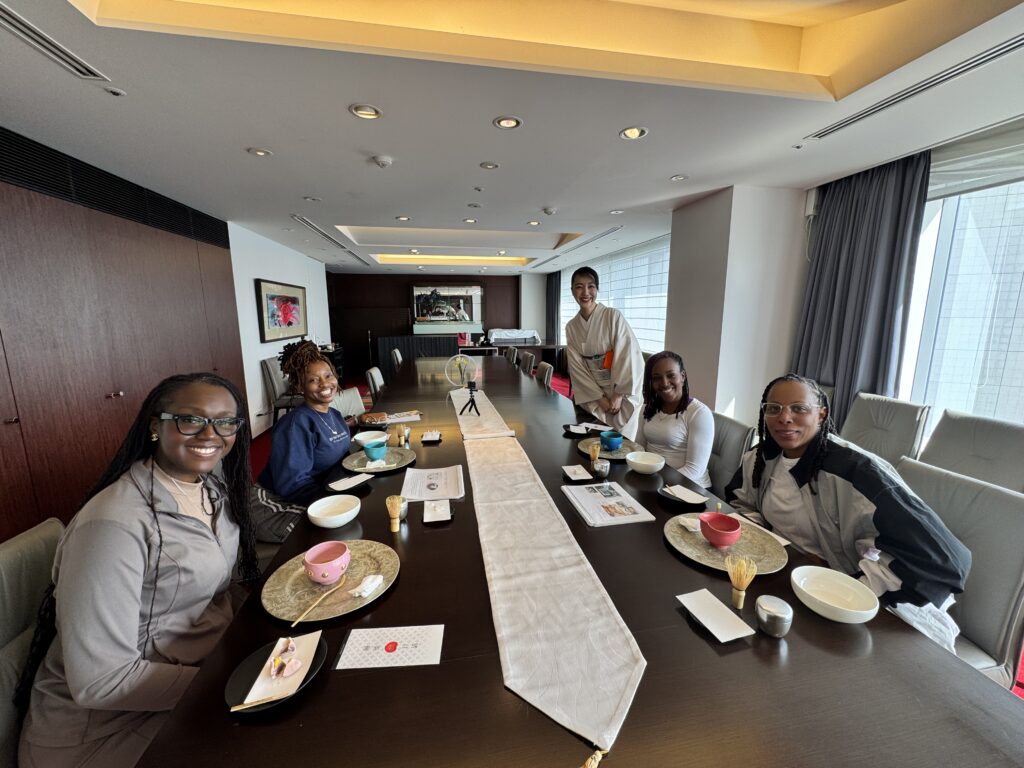
The ceremony allowed us to close the journey the same way it had unfolded: through reference and participation.
The Japanese tea ceremony, known as Chanoyu, is more than preparing tea. It’s a ritual grounded in mindfulness, respect, and presence.
Our host guided us through each step with calm precision, explaining what to do and why it mattered.
– Experience Snapshot: Private Tea Ceremony –

Location: Park Hotel Tokyo
Experience Type: Private guided tea ceremony
Duration: Approx. 45–60 minutes
What we learned:
- How to properly whisk matcha tea
- Tea ceremony etiquette and bowing customs
- Symbolism behind tea ceremony movements
- Cultural philosophy of presence and intentionality
Best for:
Travelers seeking meaningful cultural immersion beyond sightseeing
Exploring Tokyo One Last Time
After the ceremony, we stepped back into the city, but this time, without an agenda.
We put our locations on and went our separate ways for a few hours, revisiting neighborhoods, exploring personal interests, and allowing ourselves to move freely through a city that had once felt unfamiliar.
By now, Tokyo felt navigable, comfortable, and familiar.

Later that night we came back together for our last dinner at the Park Hotel Tokyo.
The meal was multi-course, beautifully presented, and intentional. It mirrored the culinary care we had experienced throughout Japan.
At dinner, we reflected everything:
- Learning to ski in Shiga Kogen
- Navigating the Shinkansen
- Making sushi and ramen
- Visiting temples we had dreamed of seeing for years
In that moment, we realized how much had happened in just nine days.
And, how much we had grown through it.

And of course, one last store run…
Of course, no final night in Japan would be complete without one last visit to the places that quietly became part of our routine.
We made our final stops at 7-Eleven Japan and Don Quijote. The two places that had supported us through sore feet, upset stomachs, and late night hunger throughout the trip. We stocked up on snacks, souvenirs, and last-minute gifts to take home.
Day 10: Saying Goodbye to Japan
It was so hard to say goodbye to Japan. We had a wonderful 10 days just embracing the culture, getting lost, and eating amazing food. I couldn’t leave Japan without one final bowl of Ramen at a spot we passed several times in the train station. I noticed how locals were lined up and how good it smelled every time we passed.

Once we figured out their ordering system and enjoyed that very last bowl, we began our journey home through Haneda airport.
This was the ultimate Soft Winter Adventure…. and the perfect way to start my new year.
So, if you’re asking your if 10 days enough is in Japan, I’d say…
If you’re planning your first trip to Japan, don’t try to see everything. Give yourself enough time to experience the energy of Tokyo, the stillness of Nagano, and the food culture of Osaka. That’s where the magic happens.
Planning your own 10-Day trip to Japan?
- Download our Japan planning checklist
- Watch the YouTube series
- Join the Traveling Black Women Network
- Browse our Japan hotel reviews
If you found this blog helpful for planning your own trip to Japan, drop us a message below or at info@travelingblackwomen.com!