

Onsen Hotel in Nagano: Hotel Tsubakino

A Traditional Ryokan Experience in the Japanese Alps
Our stay at Hotel Tsubakino marked the moment our trip shifted from modern Japan to traditional Japan.
Located in the quiet onsen town of Yudanaka, just a short walk from the train station, Hotel Tsubakino offered the kind of experience that slows you down immediately. Snow fell softly outside. The air was crisp. And inside, everything from the tatami floors to the ritual of removing your shoes signaled that you had entered a different rhythm of travel.
Hotel Tsubakino is a traditional Japanese ryokan. It is a style of inn that emphasizes hospitality, seasonal cuisine, and restorative bathing. Staying here isn’t just about accommodation. It’s about participating in a centuries-old cultural tradition centered around rest, nourishment, and care.
Checking In to our Onsen Hotel
We were greeted with warm Japanese hospitality. Our hostess personally walked us to our room as is customary in traditional ryokan stays. She went over important information about what to expect and ensured that we understand the norms of the hotel. After some conversation, she handed us the keys and welcomed us into the space.
And when we stepped inside, it became clear this would be a cultural experience. When we entered our room, the space was minimalist but warm: tatami floor mats, low furnishings, and large windows showcasing the views snow-covered mountains. It was gorgeous.
At the center of the room sat a low wooden table with floor cushions arranged neatly around it. This was where we would sit, relax, drink tea, and reset after our journey.

There were no beds.
No raised furniture.
Our hostess explained that while we were at dinner, the room would be quietly transformed.
The table would be moved, and futons would be laid out in its place.
This practice reflects a long-standing tradition in ryokan culture, where rooms shift function between day and night. Historically, this allowed families to maximize space in smaller homes, using the same room for gathering, dining, and sleeping. Today, ryokans preserve this ritual as a way of honoring traditional Japanese living.
I loved every moment of experiencing all of this…
The Meals: Multi-Course Dining
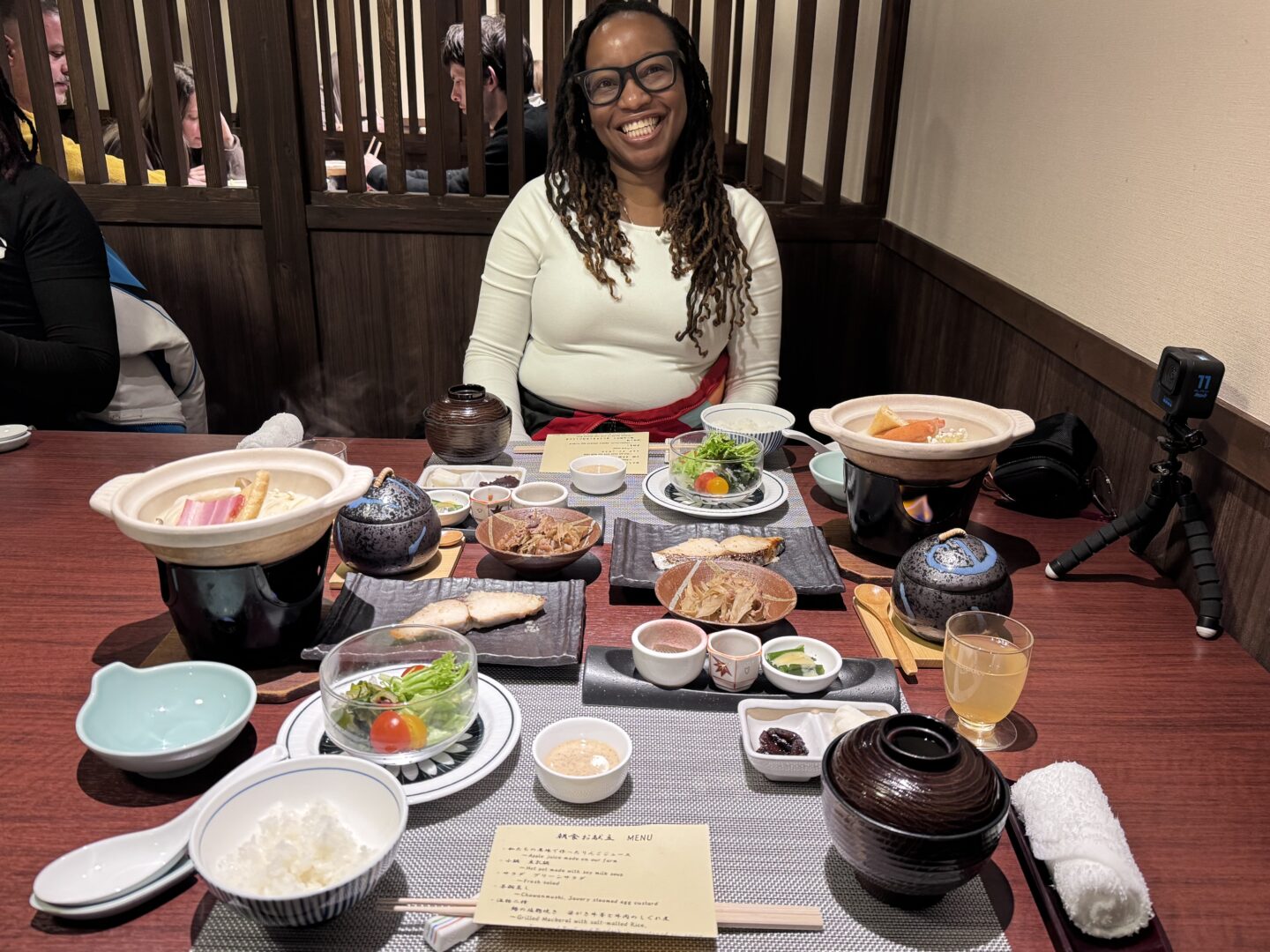
Our stay was half-board, so both breakfast and dinner were included each day. Both meals turned out to be full culinary experiences that exceeded my expectations.
Each dinner consisted of multiple beautifully presented courses, many featuring local Nagano ingredients and seasonal specialties. Several dishes were prepared directly at our table, allowing us to participate in the cooking process.

This interactive style of dining made every meal feel intentional. I loved that dinner was not a rushed experience, but instead a time to be completely present.
Course after course arrived and we were in awe. By the end of our dining experience, we felt full and cared for.
This style of multi-course dining reflects Japan’s kaiseki tradition, where meals are designed to honor seasonality, texture, and visual harmony in addition to flavor.
It became one of the most memorable parts of our entire 10-day stay.
From Living to Bedroom…
When we returned from our multi-course dinner on the first evening, we were in awe of the transformation.
The table was gone and in its place were four futons laid out carefully. Each futon was layered with soft bedding and aligned perfectly across the tatami floor.
The lighting was softer. The room felt quieter and even a bit warmer.
There was something deeply comforting about the simplicity of it.

Sleeping on a futon connects directly to Japan’s traditional lifestyle. Futons are designed to be firm yet supportive. They encourage proper spinal alignment while maintaining flexibility within the room itself. They are stored away each morning, allowing the space to return to its daytime function.
This daily transition reinforces one of the central philosophies of Japanese design: spaces should adapt to your needs, not remain fixed.
This was such a cool experience! For two nights it felt like we were having a Japanese-style sleepover!
The Onsen Experience
One of the defining features of Hotel Tsubakino is access to traditional Japanese hot spring baths, known as Onsen.
Onsens are deeply embedded in Japanese culture. They offer both physical and mental restoration. The mineral-rich waters help relax muscles, improve circulation, and calm the nervous system (especially valuable after days spent walking or skiing).
There’s one important cultural distinction, though: Public onsens require full nudity.
For many first-time visitors, including us, that can feel unfamiliar.
Hotel Tsubakino makes this transition easier by offering both public and private onsen options. On our first night, I reserved a private onsen so we could experience the ritual comfortably and privately at first.


By the next day, we felt confident enough to use the public onsen (which was open daily) and it became one of the most restorative parts of our entire Nagano experience.
Sitting in warm mineral water while snow fell around us, and icicles formed over head was something I’ll never forget.
It was the essence of soft adventure.
Location: Perfectly Positioned for Nagano’s Winter Experiences
Another reason I love Hotel Tsubakino is its location.
The hotel is within walking distance of Yudanaka Station, making arrival and departure easy.
From there, we were able to access some of Nagano’s most iconic winter experiences effortlessly.

Including:
- Local onsen streets and traditional shops
- Jigokudani Snow Monkey Park
- Shiga Kogen, one of Japan’s largest and most scenic ski areas
Public buses conveniently connect the town to these destinations, allowing you to explore without needing a car.
This accessibility made Nagano feel both peaceful and practical.
Add Nagano to Your Japan Travel Itinerary…
Hotel Tsubakino allowed us to experience winter in Japan as participants in its traditions through food, bathing, and intentional rest. It was a change in pace that showed us what Japan was like outside of the hustle and bustle of the main cities.





4 Responses
furosemide
furosemide
metoclopramide hcl
metoclopramide hcl
vardenafil 20mg price
vardenafil 20mg price
vibramicina
vibramicina
Comments are closed.